

Try running a focus group where one participant answers every question by pointing at a laminated card, another goes silent for ninety seconds before shaking their head, and a third has a support worker sitting just outside the circle. Now write that up for an ethics committee. That's the practical face of ethical inclusion of non-verbal participants in research, and it's where most standard protocols fall apart.
I've sat on both sides of this: as a researcher adapting studies for people who communicate without speech, and as the person filling in the ethics application at 11pm wondering whether "assent" means what I think it means. The textbooks gave me the five principles. They did not tell me how to recognise a "no" from someone who never says the word.
This article is about that gap. Not the theory you already know, but the operational decisions — who consents, how you detect dissent, what you do when a proxy and a participant disagree, and how you document any of it in a way an IRB will accept.
Key Takeaways
- Consent for non-verbal participants is a process, not a signature — plan for repeated, communication-appropriate checks.
- Dissent can be expressed behaviourally; you need pre-defined indicators and stop criteria written into the protocol before you start.
- Proxies are a bridge, not a replacement. Their authority has limits you should state explicitly.
- Triangulation — observation, proxy input, and participant behaviour — is the backbone of valid data here.
- Document the accommodations you made. If it isn't written down, it didn't happen for the reviewer.
Why standard consent protocols fail non-verbal participants
Most consent forms assume two things: that the person can read, and that they can tell you yes or no. Both assumptions collapse the moment you work with someone who uses augmentative and alternative communication (AAC), or who has a cognitive profile that makes abstract explanation unreliable.
Look, the failure isn't usually malice. It's design. A form is a document. A conversation is a relationship. When the participant can't read the form, you're forced into a conversation, and conversations don't get audited the same way documents do — which is exactly why they need more structure, not less.
What are the 5 main ethical issues in research?
The five recurring issues are informed consent, protection from harm, confidentiality and privacy, fair selection of participants, and managing conflicts of interest or researcher bias. In non-verbal research, the first two are where the real friction sits: consent becomes a communication design problem, and harm protection depends on your ability to notice distress you may not be told about.
What are the 7 key ethical considerations in research?
A useful working set: informed consent, voluntary participation and right to withdraw, minimising risk of harm, confidentiality and data protection, equitable access and inclusion, independence of the review (ethics committee oversight), and integrity in reporting. Notice that "equitable access" is on that list — excluding non-verbal people from research is itself an ethical failure, not a cautious default.
Consent that actually reaches the participant
On one study I adapted, we replaced a four-page form with a set of symbol-supported cards and a short video in which a familiar support worker explained the task. Comprehension checks went from "we hope so" to "we watched them explain it back." That single change did more for the ethics of the project than any paragraph of the application.

Here's the thing: valid consent has three moving parts, and all three need a non-verbal route.
- Capacity — can this person understand and retain the essentials at this moment? Capacity is task-specific and can fluctuate.
- Information — delivered in a format they actually process, not a format that satisfies the file.
- Voluntariness — and this is the one people skip. If a participant depends on staff for daily care, "no" is expensive for them to say.
Proxy consent and assent: who actually decides?
A proxy — usually a family member or legal representative — can authorise participation when capacity is limited. But proxy consent does not erase the participant's own signals. Best practice is proxy consent plus participant assent, where assent is sought continuously through whatever channel works: vocalisations, gestures, attention direction, engagement with the activity.
What happens when they conflict? In my experience, the participant's refusal wins. Every time. A proxy can say yes on paper; they cannot override a person who is actively pulling away from the task. Write that hierarchy into your protocol before the committee asks.
Detecting dissent when there are no words
Silence is not consent. This is the sentence I'd tattoo on every consent form if I could.
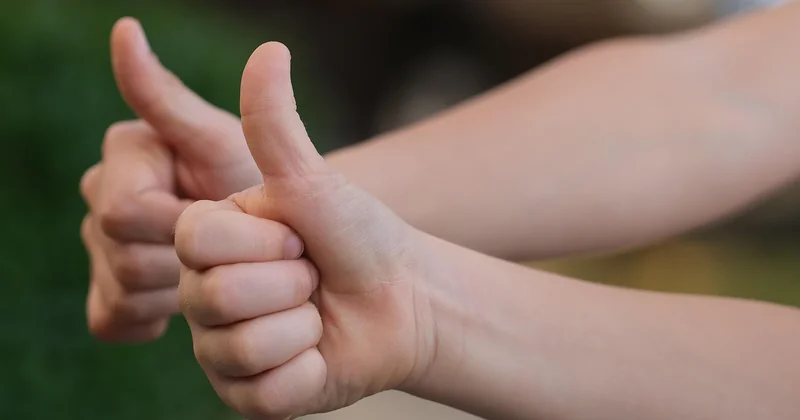
Non-verbal dissent shows up as behaviour: turning the head away, pushing materials back, closing eyes, increased self-stimulation, crying, leaving the space, or a sudden change in breathing or muscle tone. In one session I ran, a participant who had agreed to everything on paper began humming loudly and rocking within four minutes of the task starting — the support worker told me afterwards that was their distress signal. We stopped. That session produced no data, and it was the most ethically successful session of the project.
Which brings up an obvious problem: you can only detect a signal you already know about. So ask the people who know the person.
Indicators and stop criteria you should define in advance
- List 4–6 individualised behavioural indicators of comfort and discomfort, gathered from carers before data collection.
- Set a hard stop rule — for example, two consecutive discomfort indicators within a set timeframe ends the session.
- Name the person authorised to call a stop, and make sure it isn't only the researcher with a deadline.
- Decide what happens to data collected before the stop signal. My rule: if distress preceded it, the data is withdrawn.
- Add a debrief for the participant, not just the proxy.
Three approaches to inclusion, side by side
Not every study needs the same level of adaptation. Below is how the common routes compare on the dimensions an ethics committee actually scrutinises.
| Approach | Consent route | Dissent detection | Main ethical risk |
|---|---|---|---|
| Exclusion by default | Not applicable | Not applicable | Systematic exclusion of a whole population from evidence |
| Proxy-only inclusion | Representative signs | Weak — relies on proxy reporting | Participant's own wishes go unheard |
| Adapted, multi-channel inclusion | Proxy consent + ongoing assent | Individualised behavioural indicators | Higher setup cost and researcher training burden |
The third row is more work. It is also the only one that treats the participant as a person rather than a category. In my opinion, exclusion dressed up as protection is the laziest ethical position available, and I'll defend that claim in any committee room.
Confidentiality and the proxy problem
Non-verbal participants often can't give feedback on a draft transcript, which means the usual member-checking step disappears. That's a real weakness, and pretending otherwise doesn't help anyone.
Two mitigations I use: first, involve the participant in reviewing visual material — photos, short clips, symbol summaries — rather than text; second, anonymise more aggressively than you would with a verbal cohort, because small populations make re-identification trivial. In a group of eleven people in one region, "a 34-year-old AAC user in the north" is not anonymous. It's a name with the vowels removed.
What are the ethical considerations for research participants?
For any participant, the core considerations are informed and voluntary consent, freedom to withdraw without penalty, protection from physical and psychological harm, privacy and secure data handling, and fair access to the benefits of the research. For non-verbal participants, each of these needs a communication-appropriate route — and that route should be described in the protocol, not improvised in the room.
What are the 5 principles of nonverbal communication?
Non-verbal communication is contextual (the same gesture means different things in different settings), culturally shaped, often ambiguous on its own, frequently emotional in function, and continuous — it doesn't switch off between questions. That last one matters most here: a participant is communicating throughout the session, not just when a prompt is put to them. Your observation window has to cover the whole thing.
What to write into the protocol
An ethics committee will not read your good intentions. It will read your procedure. The practical answer is a short, explicit section covering consent format, individualised comfort indicators, stop criteria, the proxy's defined role and limits, and the data-withdrawal rule after a distress signal.
One mistake I made early on was burying these decisions in an appendix. The reviewer missed them, the approval came back with conditions, and I lost three weeks. Put the adaptations in the main body. Bold them if you have to.
And when you publish, say who was in the room and how they were supported. Methods sections that quietly omit the AAC user, the interpreter, or the support worker leave the next researcher with nothing to copy.
The uncomfortable truth is that most guidelines were written for people who talk. Adapting them isn't a technicality — it's the whole job. The next time you design a study, ask one question before you submit anything: could the person on the other side of this protocol tell me no in a way I would actually notice?


