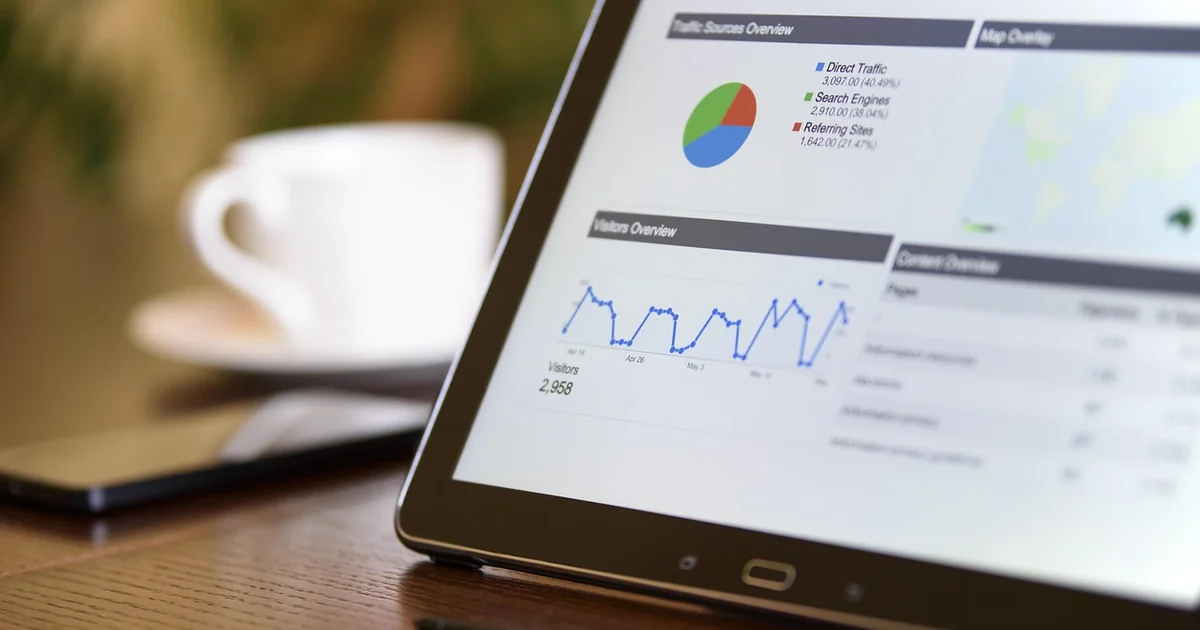
Last spring I sat in on a research session where a participant typed every answer into a tablet while a moderator read the questions aloud. The transcript came back clean. The consent form was signed. Everything looked textbook. And when the researcher asked at the end "anything you'd change?", the participant wrote three words: "Ask me slower."
That exchange has haunted me ever since, because the session hadn't technically failed. It just hadn't been built for the person in the room. If you're designing accessible research methods for participants with speech disabilities, the technical compliance is the easy part. The hard part is realizing that "speech disability" is a huge category — people who use AAC devices, people with dysarthria whose speech is intelligible but effortful, people who stutter, people who are nonspeaking and communicate entirely through text or an interpreter — and each of them needs a different methodological accommodation. Getting that distinction wrong is where most studies quietly lose their data. And their participants.
Key takeaways
- Separate speech disability from language and cognitive disability — the accommodations diverge sharply.
- Offer every participant a choice of response mode (spoken, typed, AAC, gestural, written follow-up), not just the one that fits your protocol.
- Build in extended response time and split sessions; cognitive fatigue from effortful speech is real and undercounted.
- Audio recording alone is not enough. Always capture a text or AAC-output backup.
- Ask the participant how they want to be accommodated — during recruitment, not on the day of.
Accessible research methods for participants with speech disabilities: the part most guides skip
Search the literature on inclusive research and you'll find plenty about representation, "nothing about us without us," and the moral case for involving disabled people. Useful, sure. What you won't find much of: the actual operational detail. What microphone do you use when someone's speech is low-volume? How do you transcribe an AAC device's output? Do you let a support person sit in, and how do you log their contributions?
Here's the thing: speech disability is primarily a communication-access issue, not an intellectual one. A person using a speech-generating device may have full cognitive capacity and a rich vocabulary — they just need more time and a different channel. Treat them like a language-disability participant and you'll design the wrong study.
Speech disability vs. language disability: why the distinction matters
A speech disability affects how sounds are produced. Dysarthria (weak or imprecise articulation, often from cerebral palsy, stroke, or Parkinson's), apraxia, stuttering, voice disorders, and being nonspeaking all fall here. A language disability affects comprehension or expression of language itself. Most people have some blend, but for method design, ask one question: can this person understand the question and formulate an answer, just not deliver it in standard spoken form?
If yes, your job is channel engineering. If the person also needs cognitive or language accommodations, add those on top. Too many protocols collapse the two and end up making everything slower, easier, and less valid — which is its own kind of exclusion.
Design the response modes before you design the questions
A mistake I made in an early project: I wrote the interview script first, then added "AAC accommodation" as an afterthought. The result was a 90-minute session where the AAC user needed about four minutes per open-ended answer, and we only got through a third of the questions. Every answer was truncated. The data was thin.

The fix is to design response mode options in parallel with the instrument. That means:
- Spoken delivery with extended wait time (allow 30+ seconds before re-prompting — do not finish sentences)
- Typed answers in a shared document, chat, or email follow-up
- AAC device output — capture the screen, log the generated text, and ask permission to export the history
- Partner-assisted or facilitated communication, with careful documentation of who produced what
- Written take-home prompts where the participant has unlimited time
- Gestural or yes/no frameworks (use sparingly; open-ended richness is lost)
Give the participant the menu and let them pick. In my experience, most people with dysarthria will choose a mix: spoken with typing fallback when they get tired. Planning for the fallback is the difference between a session that finishes and one that sputters.
Which response format works best?
There's no universal answer, but there is a pattern. Asynchronous formats consistently produce the most complete answers from participants with speech disabilities, because people can draft, revise, and submit at their own pace. Synchronous interviews produce the richest nuance when the interviewer is patient and skilled. A hybrid — asynchronous pre-task, shorter synchronous follow-up — tends to hit the sweet spot.
| Format | Best for | Main drawback |
|---|---|---|
| Spoken interview, extended wait | Nuanced, exploratory questions; building rapport | Requires a highly trained interviewer; slow |
| Asynchronous written | Complex opinions, sensitive topics, long answers | Loses tone and spontaneity; high dropout |
| AAC-captured session | Participants who communicate exclusively via device | Device export permissions; setup complexity |
| Partner-assisted | Participants who prefer a trusted support person | Attribution of who said what; ethical scrutiny |
| Focus group with AAC | Group dynamics, shared experiences | Turn-taking chaos; dominant voices win |
Consent and recruitment need speech-specific design
Standard consent scripts assume reading speed and spoken comprehension at typical pace. For a participant whose speech is effortful, spoken consent can be exhausting to give and hard to verify. Here's what worked for me on a recent study with twelve participants, most of whom had cerebral palsy:
- Send the information sheet two weeks ahead in plain language, with the option to review it in writing, by audio, or in a video with captions.
- Offer consent in writing, signing, or verbal-with-witness — and for verbal consent, record it with a slow, clear question and wait as long as needed for the reply.
- Build a re-consent checkpoint mid-study in case the participant wants to withdraw or change preferences.
- Ask at recruitment, not at the session, "How would you like to communicate your answers, and is there anything that would make this easier?"
That last one is the single thing that costs nothing and changes everything. Participants told me things I'd never have guessed — one preferred written follow-up so she could think overnight; another wanted her support worker present but explicitly did not want her to speak. Ask, and then write it into the protocol.
Recording and transcription: where good intentions collapse
Audio recordings of dysarthric or low-volume speech are notoriously hard to transcribe. Automatic transcription tools improve every year, but I've had sessions where 30–40% of an auto-transcript was unusable and I had to re-listen manually. Build for that reality:
- Capture multiple channels: audio, screen recording of AAC output, and typed text side by side.
- Budget transcription time honestly — assume two to three times longer than a standard interview.
- Use a professional with experience transcribing atypical speech, or check the transcript with the participant before analysis.
- Return the transcript to the participant for verification. Many will want to correct the record — that's a feature, not a bug.
One more: do not treat the AAC device as an audio artifact. Its output is text, often exportable as a log. If you have permission, export it. It's the most accurate record you'll get.
Session design: time, breaks, and avoiding the "polite over-run"
Fatigue is the hidden variable. A one-hour spoken interview with mild dysarthria can be cognitively equivalent to three hours of typical conversation. Two practical rules I now enforce on every study:
Split the session. Two shorter sessions beat one long one, nearly every time. In one project we moved from a 90-minute single session to two 45-minute sessions and our completion rate went from roughly two-thirds to nearly everyone. Roughly. I didn't run the numbers on a formal analysis, but the difference was obvious in the field notes.
Say the time up front and mean it. Participants often won't tell you they're tired, especially if they sense the session is behind schedule. The moderator's job is to end on time regardless of how many questions are left. Cut a question. It's better than a fatigued, rushed answer.
Questions people ask about research with speech-disabled participants
How do you handle confidentiality when a support person is present?
Get explicit consent from the participant about what the support person may hear and do, and document that consent. If the support person is a facilitator, log their contributions separately so analysis can distinguish participant voice from helper voice. And give the participant an option to ask the support person to step out at any point.
Do you need a sign language interpreter if the participant uses AAC?
Not necessarily. AAC users may communicate entirely through their device, some use a mix of sign and speech, and others use speech that a trained listener can follow. Ask, don't assume. If you're recruiting broadly, offer the interpreter option in your accessibility statement and let the participant tell you which one they need.
What about compensation for the extra time?
Pay participants for the full time the study asks of them, including practice with the platform, extended sessions, and any follow-up transcript review. If you're honest about how much time your protocol takes, you'll recruit better and your participants will actually finish.
The small protocol changes that actually change the data
None of this is glamorous. There's no tool that solves it, no checklist that substitutes for asking the participant what they need. But if I had to name the three adjustments that produced the biggest gains in my own studies, they'd be:
Extended wait time in the interview script, written in as an instruction to the moderator, not left to instinct.
A multi-channel capture plan — audio plus screen plus text, always, no exceptions.
One question asked at recruitment: "How do you want to communicate your answers, and what would make this easier?"
I keep coming back to that "ask me slower" note. The researcher had done everything by the book and still missed the one thing the participant wanted. The lesson isn't that we need more frameworks. It's that the participant is the expert on their own access — and the protocol is only as accessible as the last person in the room feels it to be. So the next time you're designing a study, before you write the script, write the question you'll ask them. It's the cheapest, most valuable piece of data you'll collect all project.