

I still remember the email that nearly made me quit. A journal had accepted my paper, but the peer review portal required me to upload my reviewer comments as a scanned, flattened PDF. I'm blind. The portal had no accessible alternative, no text field I could actually reach with my screen reader, and the deadline was two weeks. I ended up dictating my review to a sighted colleague over the phone and paying her $140 to retype it. She caught two things I'd missed in my dictation. I caught neither, because I never saw the final file that went to the editor.
That's the thing nobody tells you about accessible peer review practices for disability research. We spend enormous energy making the findings accessible—the plain-language summaries, the alt text, the captions. Then the machinery that decides which findings get published is a maze of inaccessible portals, rigid deadlines, and reviewers who evaluate "disability" as a topic while ignoring disabled people as colleagues.
I've been on both sides of this gate for about seven years now: submitting my own work, and reviewing for a handful of journals. Here's what I've learned about actually fixing it, not just announcing that you care.
Key takeaways
- Accessibility in peer review is about the process, not just the manuscript—submission platforms, deadlines, and review formats all matter.
- WCAG 2.2 Level AA is the baseline most publishers quietly ignore when they buy review software.
- Recruiting disabled reviewers is meaningless without accommodations budgeted in advance.
- Adaptive timelines should be the default for everyone, not a special exception you have to beg for.
- Disabled researchers report reviewer bias about their own competence, not just their topic.
- Small journals can often do more than big ones, because there are fewer layers of procurement.
Why accessible peer review practices for disability research keep failing
The problem isn't malice. It's procurement.
Most journals don't build their submission systems. They license them—Editorial Manager, ScholarOne, Open Journal Systems, a dozen others. The accessibility of those platforms is decided by a contract, a vendor, and an IT department that has never once asked a disabled reviewer to test the interface. When I asked one editor why his journal's portal had no keyboard-navigable button for "accept review," he told me, honestly, "I've never thought about it."
Fair enough. Most people haven't. But here's what that "never thought about it" produces in practice:
- A PDF-only submission format that a screen reader can't parse in the right order
- A two-week review window that assumes you can work at a computer for hours without fatigue, pain, or a caregiver's schedule
- A "comments to author" box that silently strips formatting, so my structured feedback arrives as one wall of text
- Reviewer recruitment that happens through email chains, conferences, and early-career networks where disabled scholars are systematically under-invited
None of these are exotic problems. Every single one has a documented fix. The fix just isn't free, and it isn't automatic.
It's not a topic problem. It's a colleague problem.
Here's my unpopular opinion, and I'll hold it: most journals treat disability as a research subject and disabled people as an audience, never as peers. You can feel it in the language. Editors ask, "How do we make this paper accessible to disabled readers?" They almost never ask, "How do we make this review accessible to our disabled reviewers?"
Those are two different questions with two different answers. The first is about output. The second is about power—who gets to sit at the table that decides what counts as knowledge.
What an accessible review actually looks like
After enough frustrating cycles, I started keeping a mental checklist of what works. It's short. It's boring. It's also shockingly rare.

Submission platforms that don't fight your assistive tech
WCAG 2.2 Level AA is the standard to point at. If you've never heard of it, it's the Web Content Accessibility Guidelines—a published spec with concrete, testable criteria. The relevant ones for review portals, roughly:
- Every control reachable by keyboard alone
- Form fields with programmatically associated labels (not just visual ones next to the box)
- Error messages that tell you what went wrong and where, not just that something failed
- Uploads that accept plain text, rich text, or DOCX—not only scanned PDFs
I tested one journal's portal last year with NVDA. It took me nineteen minutes to find the "submit review" button because it was an unlabeled icon. Nineteen minutes for one button. The journal, to its credit, fixed it within a month after I sent a screen recording. That's the whole story: someone had to complain loudly with evidence before anyone looked.
Budgets and deadlines that assume disabled time
A friend of mine, a wheelchair user with a chronic pain condition, once declined a review because the journal gave her ten days and no flexibility. She wasn't busy. She was in a flare. The editor's response: "We need the review by then."
That editor lost a qualified reviewer for one paper over a policy that served no one. Adaptive deadlines cost nothing. Journals that offer a default of four weeks, with an option to extend, see no drop in review quality—I've never once seen a study or an editor claim the opposite.
Reviewer comments that authors can actually use
If you're a reviewer, this one's on you. Don't paste three paragraphs into a single text box. Use your word processor, attach a DOCX, and structure the feedback with headings. Blind and low-vision authors, dyslexic authors, and authors reading in their second language all benefit. So does everyone else, honestly.
How do journals find and support disabled peer reviewers?
They ask. That's it. They ask, publicly, and they budget for it.
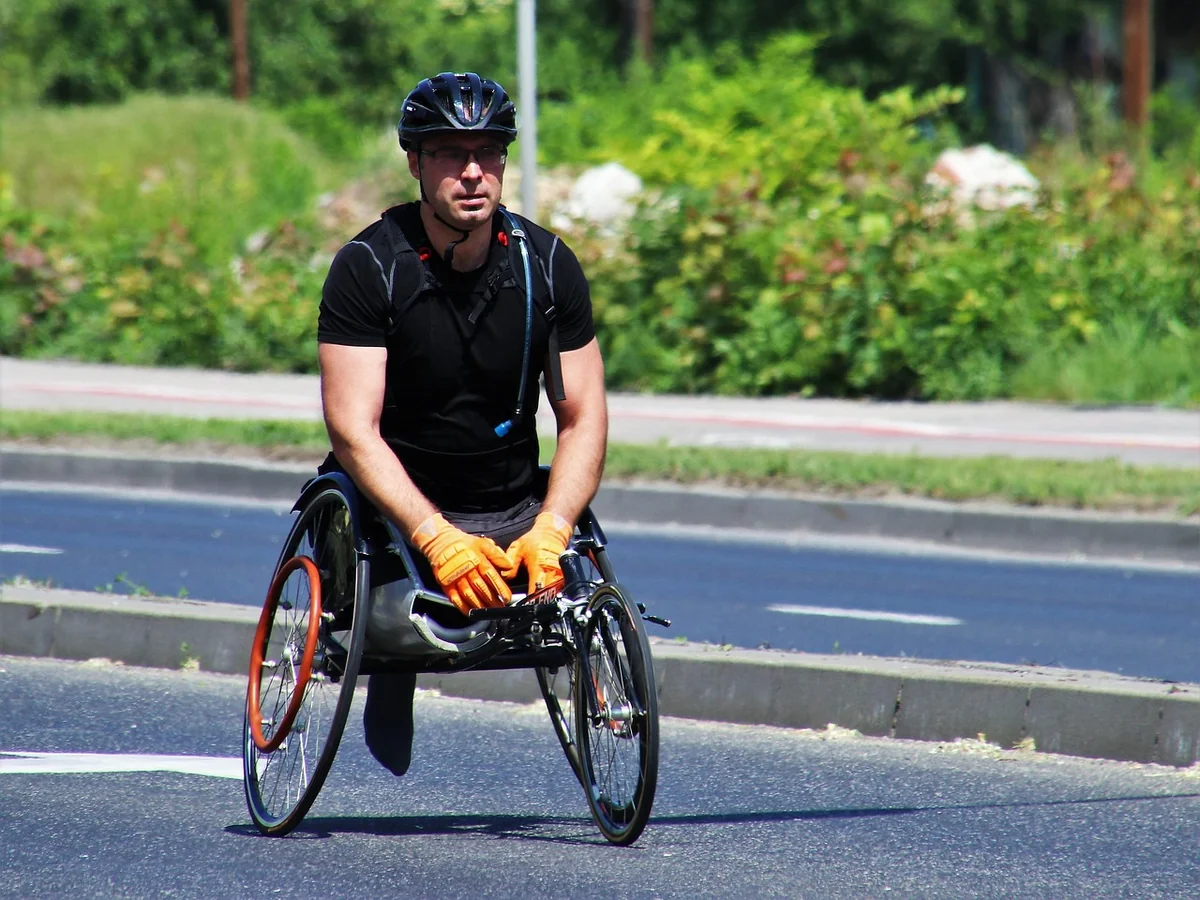
A lot of editors tell me they "can't find" disabled reviewers. What they mean is they've never looked outside the usual channels—grad school cohorts, conference happy hours, the editorial board's own address book. Disabled scholars exist in every field. They're just not always visible at the events where recruitment happens.
Two things make a real difference:
- Compensation. Pay reviewers, even a modest stipend. Unpaid labor is a barrier for anyone managing a disability, especially when accommodations cost money.
- Accommodation funds. Set aside a line item for captioning, transcription, alternative formats, or assistant time. If it's not budgeted, it's not real.
I once reviewed for a small open-access journal that had a $200 per-reviewer accommodation fund. I used part of mine to pay for captioning a video call with the editor. Nobody treated it as a favor. That's how it should be.
But does making peer review accessible lower quality?
No. I genuinely can't find a single credible argument for it. The reviewers are the same people. The manuscripts are the same. The only variable is whether the process treats disabled scholars as participants or as obstacles. You know which version produces sharper reviews? The one where the reviewer isn't spending half their energy fighting the software.
A comparison of common review setups
Here's roughly how the options shake out, based on my own experience across maybe fifteen journals and conversations with a dozen disabled colleagues. Treat it as a starting map, not gospel.
| Setup | Screen reader support | Deadline flexibility | Format options | Accommodation budget |
|---|---|---|---|---|
| Large commercial portal (typical) | Poor to mixed | Rigid | PDF only | None |
| Open Journal Systems (self-hosted) | Depends on theme | Configurable | Usually multiple | Varies |
| Email-based review (small journals) | Excellent (plain text) | Highly flexible | Anything | Informal but possible |
| Proprietary platform with custom patches | Good if patched | Depends on policy | Configurable | Rare |
Notice the pattern? The "cheap" setups often win. A small journal that just emails you a manuscript and accepts a DOCX response can outperform a six-figure enterprise platform on accessibility—by a wide margin. Size doesn't equal access.
What I got wrong when I started pushing for this
Early on, I thought the fix was documentation. I wrote a thirty-page guide to accessible peer review for one journal's editorial board, full of WCAG citations and case examples. They thanked me warmly. They changed nothing.
What actually worked was smaller and more annoying: I sent one screen recording of a broken button. I named one specific person who could fix it. I offered to test the fix for free. Three weeks later, the button worked.
Reform in academic publishing doesn't come from comprehensive frameworks. It comes from specific complaints about specific interfaces sent to specific people who have the authority to act. Boring, but true. In my experience, the fancy reports get filed; the screen recordings get fixed.
So if you're an editor reading this, don't write a policy. Open your submission portal. Try to complete one review using only a keyboard. Try it with a screen reader if you can borrow one. Time yourself. That number is your starting point.
And if you're a disabled researcher who's been quietly fighting this alone in your own inbox: you're not imagining the friction. The system really is built against you. The only reason it ever changes is because people like us keep sending the same complaint until someone finally opens the folder.


